“I was highly skeptical, but now I’m a believer.”
That’s a phrase I find myself constantly repeating in recent conversations about LLMs and AI and it turns out, I’m far from alone! I’ve heard/read variations of this statement multiple times in the past few weeks.
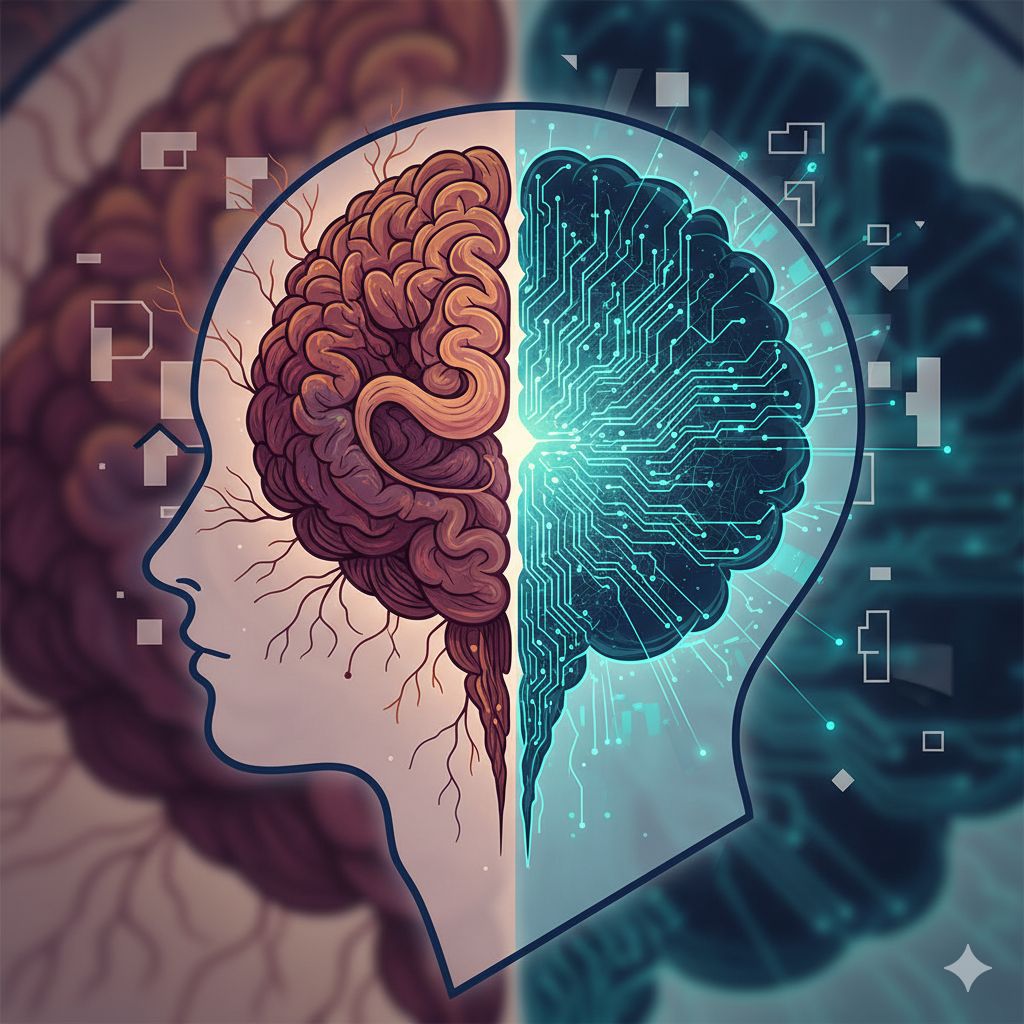
My own perspective has evolved over the past few months due to three primary factors:
Model Evolution and Agentic Capabilities: Advances in AI models, particularly the development of “Agentic mode”, have enabled previously unfeasible applications.
One impactful change was the release of Sonnet 4.5, which was a significant improvement over previous models, allowing me to solve problems that were previously unsolvable. But it wasn’t just the ability to solve problems, it was the fact that it could write clearer, better-structured, more maintainable code.
The adoption of Spec Driven Development (SDD) further enhanced the utility of these models, enabling me to leverage their capabilities more effectively. Specs help the model stay focussed and help you clarify your ideas; putting down clear directions instead of vague prompts. I used BMADv4, you can check out the latest version at https://docs.bmad-method.org
Identification of Practical Applications: I identified specific use cases where LLMs demonstrated undeniable value, prompting further investigation.
It wasn’t the first time I used LLMs. I’d been testing them since 2022, I had a local chat interface deployed in my home server, used autocompletion in my IDE, and chatted with GPT online. I found some joy in it, but I wasn’t really seeing the value. I was just playing around.
In October 2025, I had a specific problem to solve, and I thought, “Let’s see if I can use SDD to tackle this”. I didn’t rush it. I took my time to write the spec, iterating a lot to learn how to write good specs and use the tool effectively. The result proved to me that it was worth the effort.
That experiment made something click in my mind. We finally had a tool that could deliver the promised value.
Enhanced Proficiency and Confidence: Initial successes fostered increased confidence, leading to broader experimentation and improved skill in leveraging AI.
From there it was all about experimenting. The model was good enough, the specs had clear value, I just needed to learn how to pair them effectively. If this was working, what else could I do with it? I started experimenting with different use cases: frontend, backend, data analysis. I used BMAD to brainstorm ideas, write documentation, and write essays.
I started testing other SDD tools (speckit and Kiro) and while I enjoyed them, I kept coming back to BMAD. It felt more complete, more polished, more powerful, and I got better results with it.
This process also sharpened my prompting skills. I developed an intuition for what worked and what didn’t, and I learned what I could trust the model with versus what needed a human touch.
For those yet to fully engage with AI, consider the opportunities for discovering your own impactful applications. The journey from skeptic to believer is a powerful one.
Conclusion
Based on these lessons, one thing stands out: yes, the models got better—Sonnet 4.5 was a significant improvement, and SDD amplified its power. But what really changed was my mindset. I stopped seeing models as the magic wizard everyone described, a genie that could solve any problem, and started seeing them as tools powerful but with clear limitations, and real potential if wielded correctly.
Drawing from these experiences, I wrote about the 5 mistakes when starting with Agents for those just beginning to explore this space.
What’s your own journey been? Have you found that moment where skepticism shifted to belief?